
Laser for Gum Treatment: Uses, Benefits and What to Expect
- Dr. C. A. Prakash, M.D.S., M.B.A.
Summarize this blog post with:
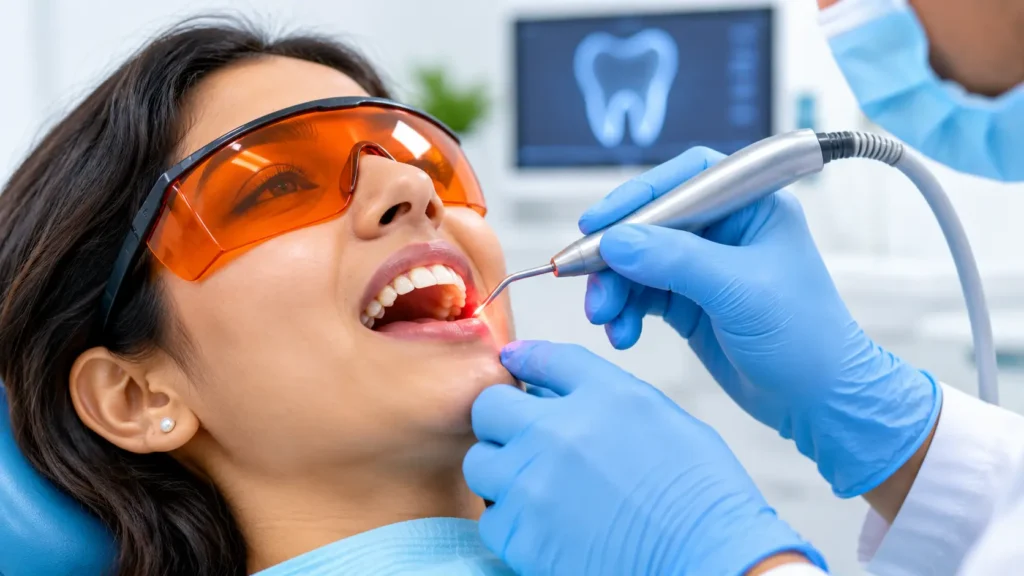
Laser for gum treatment uses focused light energy to remove or reshape gum tissue and support selected dental procedures. Dentists may recommend it for conditions such as excess gum tissue, uneven gum lines, and certain periodontal treatments, depending on the patient’s oral health.
Laser dentistry treatments offer another approach to selected dental procedures. However, the right treatment depends on the condition being treated, the type of laser used, and a dentist’s clinical assessment.
At Cap’s Dental Clinic & Face n Jaw Centre, Adambakkam, patients can consult a dentist to understand suitable gum treatment options and choose an approach based on their dental needs.
What Is Laser Gum Treatment?
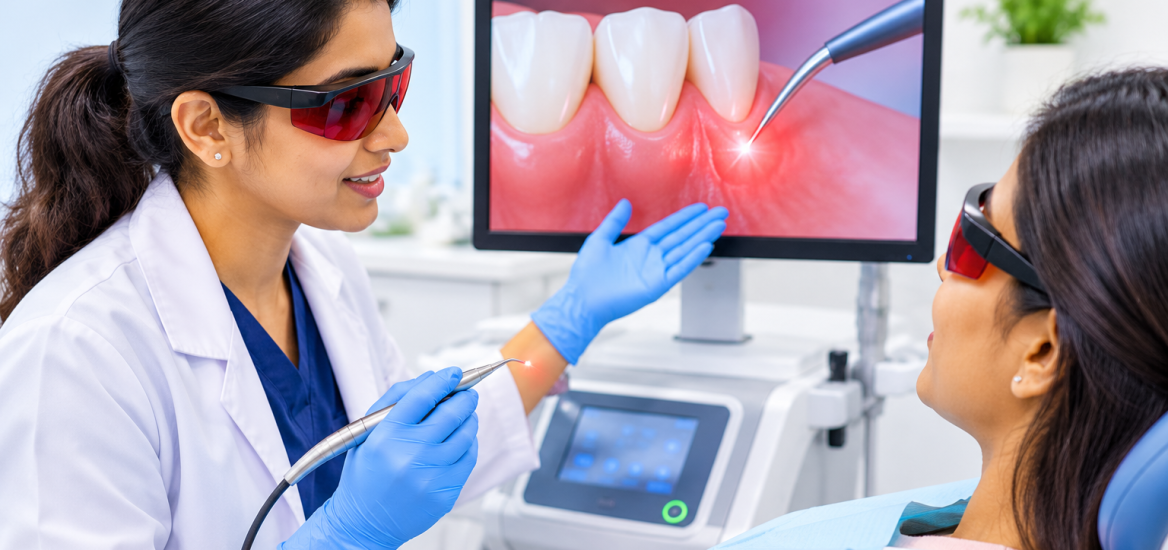
Laser gum treatment is a dental procedure that uses concentrated light energy to work on specific gum tissues. Depending on the laser system and treatment objective, it may be used to remove excess tissue, reshape the gum line, or support selected periodontal procedures.
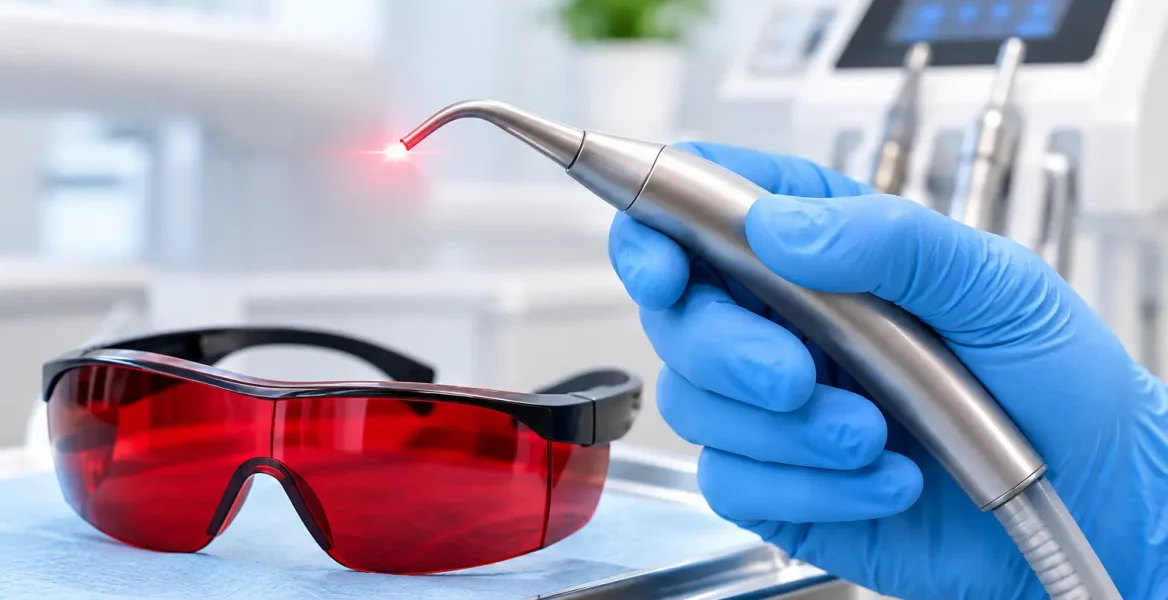
Unlike conventional instruments, a dental laser uses light energy to perform specific tasks on soft tissue. The dentist selects the appropriate equipment and settings according to the procedure.
When Is Laser for Gum Treatment Recommended?
A dentist may consider laser treatment for certain gum-related concerns.
- Excess Gum Tissue
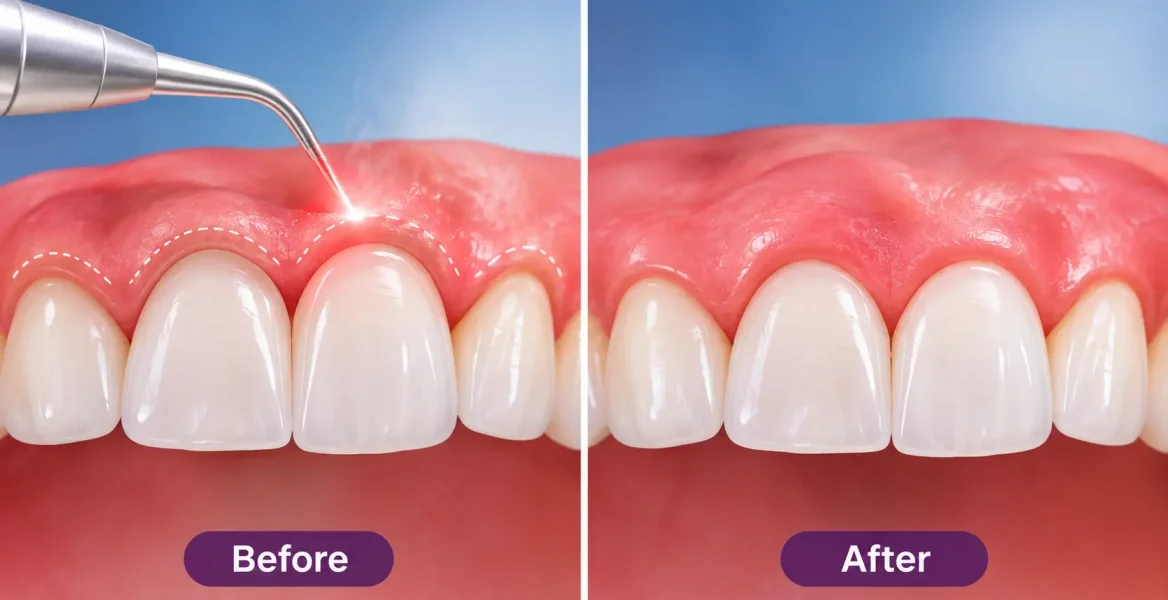
Some people have excess gum tissue that covers more of the visible tooth surface. In selected cases, laser gum reshaping can remove or reshape excess tissue to create a more balanced gum line.
- Uneven Gum Line
An uneven gum line can make teeth appear different in length. Depending on the cause, a dentist may recommend gum contouring to improve the appearance of the smile.
- Gummy Smile
A gummy smile occurs when a noticeable amount of gum tissue is visible while smiling. Laser gum reshaping may be suitable for some mild cases where excess gum tissue is the main cause.
- Selected Periodontal Procedures
Dental lasers may be used in certain procedures involving gum disease. Depending on the patient’s condition, they may be used alongside conventional periodontal treatment.
If smile appearance is your main concern, you may also want to explore Cosmetic Dentistry in Chennai alongside gum reshaping.
What Are the Different Laser Dentistry Treatments?
Laser dentistry treatments cover several procedures involving teeth and soft tissues. The type of laser and its application depend on the treatment objective
Laser Gum Contouring
Laser gum contouring reshapes excess gum tissue to create a more balanced appearance. It may be considered for selected cases of uneven gum lines or excess gum display.
Laser Gingivectomy
A gingivectomy involves removing excess or diseased gum tissue. A dental laser may be used for selected gingivectomy procedures, depending on the clinical condition.
Laser-Assisted Periodontal Treatment
Lasers may be used in selected periodontal procedures to treat tissues around teeth affected by gum disease. Clinically, they may be used alongside conventional methods, such as scaling and root planing, when appropriate.
Frenectomy
A frenectomy removes or modifies a small fold of tissue called a frenum. A dentist may use a laser for selected frenectomy procedures, depending on the patient’s need
Laser-Assisted Dental Procedures
Certain dental laser systems can also be used in selected procedures involving tooth structure, cavity preparation, or other soft-tissue treatments. Not every laser is designed for every dental procedure.
What Are the Benefits of Laser Gum Treatment?
Laser treatment may offer certain advantages in appropriately selected cases.
- Targeted treatment
Laser energy can be directed towards specific tissue areas
- Controlled tissue removal
It can help dentists reshape or remove selected gum tissue.
- Potentially less bleeding
Some soft-tissue laser procedures can help control bleeding during treatment.
- No stitches in selected cases
Certain minor procedures may not require sutures.
- Treatment flexibility
Different laser systems can be used for different dental applications.
Laser Gum Treatment vs Traditional Gum Treatment
Both laser-based and conventional methods have a role in dental care. The appropriate option depends on the condition being treated.
| Comparison | Laser treatment | Conventional treatment |
|---|---|---|
| Technique | Uses focused light energy | Uses dental instruments or surgical tools |
| Tissue removal | Can be used for selected soft-tissue procedures | Uses instruments to remove or reshape tissue |
| Bleeding | May help control bleeding in some procedures | Bleeding depends on the procedure |
| Stitches | May not be required in selected cases | May be required for certain surgical procedures |
| Suitability | Depends on the laser and clinical condition | Used across a wide range of dental procedures |
For gum disease, scaling and root planing remains an important conventional treatment. The American Academy of Periodontology notes that controlled studies have found similar results between certain laser approaches and scaling and root planing alone. Your dentist should explain the expected benefits and limitations of each option.
What Happens During a Laser Gum Treatment Procedure?
The exact procedure depends on the reason for treatment. A typical process may include the following steps:
- Dental Examination
The dentist examines your teeth and gums to identify the underlying concern. This may include checking gum health, measuring periodontal pockets, and reviewing dental X-rays when necessary.
- Treatment Planning
The dentist explains the recommended procedure, available alternatives, and whether laser treatment is suitable for your condition.
- Preparation
The treatment area is prepared. Local anaesthesia may be used depending on the procedure and the patient’s comfort.
- Laser Procedure
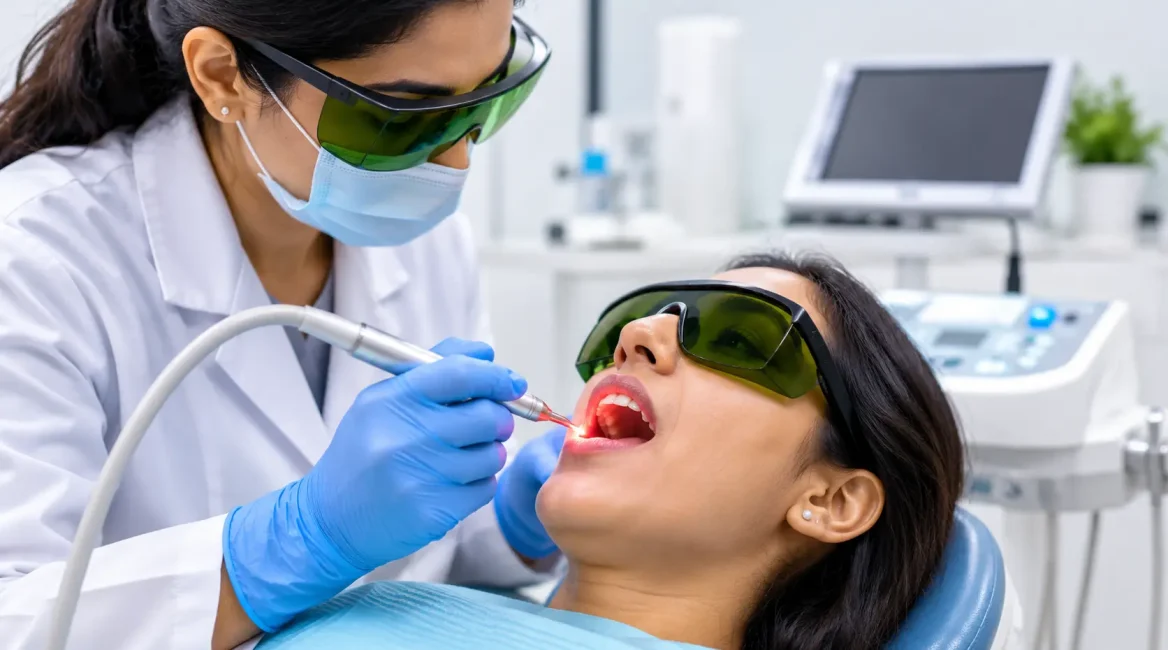
The dentist uses an appropriate laser system to perform the planned treatment. The duration depends on the area being treated and the complexity of the procedure.
- Aftercare Instructions
After treatment, the dentist provides instructions about oral hygiene, food choices, and follow-up appointments.
Is Laser Gum Treatment Painful?
The level of discomfort varies depending on the procedure, the treatment area, and individual sensitivity. Some minor soft-tissue procedures may involve limited discomfort, while other treatments may require local anaesthesia.
Your dentist will explain what to expect and recommend suitable measures to manage discomfort during and after the procedure.
Recovery and Aftercare Following Laser Gum Treatment
Recovery depends on the type and extent of treatment. Following your dentist’s instructions can help support healing.
- Follow the recommended brushing and oral hygiene routine.
- Choose soft foods if your gums feel tender.
- Avoid irritating the treated area.
- Do not smoke during the recommended healing period.
- Take prescribed medicines only as directed.
- Attend follow-up appointments.
- Contact your dentist if you notice increasing pain, swelling, bleeding, or other unusual symptoms.
Do not assume that every laser procedure has the same recovery time. Your dentist can provide instructions based on the treatment performed.
Who Is a Suitable Candidate for Laser Gum Treatment?
Laser gum treatment may be considered for patients who need selected gum procedures, such as reshaping excess tissue or treating certain periodontal conditions.
However, suitability depends on several factors:
- The type and severity of the gum condition.
- The amount and health of the surrounding tissue.
- The presence of periodontal disease.
- The patient's overall oral health.
- The type of laser available and the dentist's treatment plan.
Patients with advanced gum disease may require conventional periodontal treatment or surgery. A laser should not be selected simply because it is a newer technology.
If a gum problem is linked to a badly infected tooth, your dentist may discuss related care such as Root Canal Treatment in Chennai alongside gum treatment.
Concerned About Your Gum Health?
Contact Cap’s Dental Clinic to discuss your dental crown treatment options and plan the next steps with a dentist.
Frequently Asked Questions About Laser Dentistry Treatments
Laser for gum treatment uses focused light energy to remove or reshape gum tissue during selected dental procedures. It may be considered for excess gum tissue, uneven gum lines, and certain periodontal treatments.
Not always. Laser treatment may be useful for selected procedures, but conventional methods remain important for many gum conditions. The best approach depends on the diagnosis and clinical requirements.
Laser treatment may be used as part of selected periodontal procedures, but it should not be considered a guaranteed cure. Gum disease management often involves professional cleaning, removal of plaque and tartar, and ongoing maintenance.
Discomfort varies according to the procedure and individual sensitivity. Local anaesthesia may be used when required, and your dentist can explain how discomfort will be managed.
The duration depends on the treatment area, the procedure, and the complexity of the condition. Your dentist can provide an estimated treatment time after examining your gums.
Some minor laser gum procedures may not require stitches. However, the need for sutures depends on the type and extent of treatment.
Laser gum reshaping may help in selected mild cases where excess gum tissue is responsible for a gummy smile. Other causes may require different treatment approaches.
Possible risks depend on the procedure and equipment. Incorrect laser settings or unsuitable use can damage surrounding tissues. A qualified dentist should assess the condition and select the appropriate technique.
Consult a Dentist for Gum Treatment in Adambakkam
Healthy gums are important for maintaining strong teeth and long-term oral health. If you notice gum swelling, bleeding, excess gum display, or changes in your gum line, a dental examination can help identify the cause.
At Cap’s Dental Clinic & Face n Jaw Centre, Adambakkam, Chennai, patients can discuss their gum concerns and understand suitable treatment options with the dental team.
Book a consultation to find out whether laser gum treatment or another periodontal procedure is appropriate for your dental condition.
Concerned About Your Gum Health?
Contact Cap’s Dental Clinic to discuss your gum health and available treatment options.


